Scenery Shader
Project Overview
A highly adaptable scenery material shader designed to fake complex geometric depth and seamlessly blend multiple terrain types (Soil, Broken Soil, and Background Rocks). By leveraging Parallax Occlusion Mapping alongside dynamic Height Map Noise Blending, the shader drastically reduces polygon count while maintaining high-fidelity visuals across both floors and walls.
Originally developed in Unity's Built-In Render Pipeline using Amplify Shader Editor, the underlying node architecture has been structured cleanly for easy portability to HDRP.
Architecture Deep Dive
1. Parallax Occlusion Faking
To avoid the performance cost of actual geometric displacement, the shader utilizes Parallax Occlusion. This modifies the texture coordinates based on the camera's view angle and a height map, giving the illusion of immense depth inside cracks and rocks.

2. Height Map Noise Blending
The material dynamically transitions between different surface types (Soil vs Broken Soil) using a parameterized noise mask. I control the threshold and smoothness via exposed material properties, allowing for real-time adjustments and variations without needing extra textures natively in the engine.

3. Global Architecture & HDRP Portability
The complete routing is heavily organized. Clean abstraction of math operations and separated logic domains ensures that translating this pipeline from the Built-In RP to high-end configurations like HDRP is seamless and modular.

4. HDRP Render Showcase
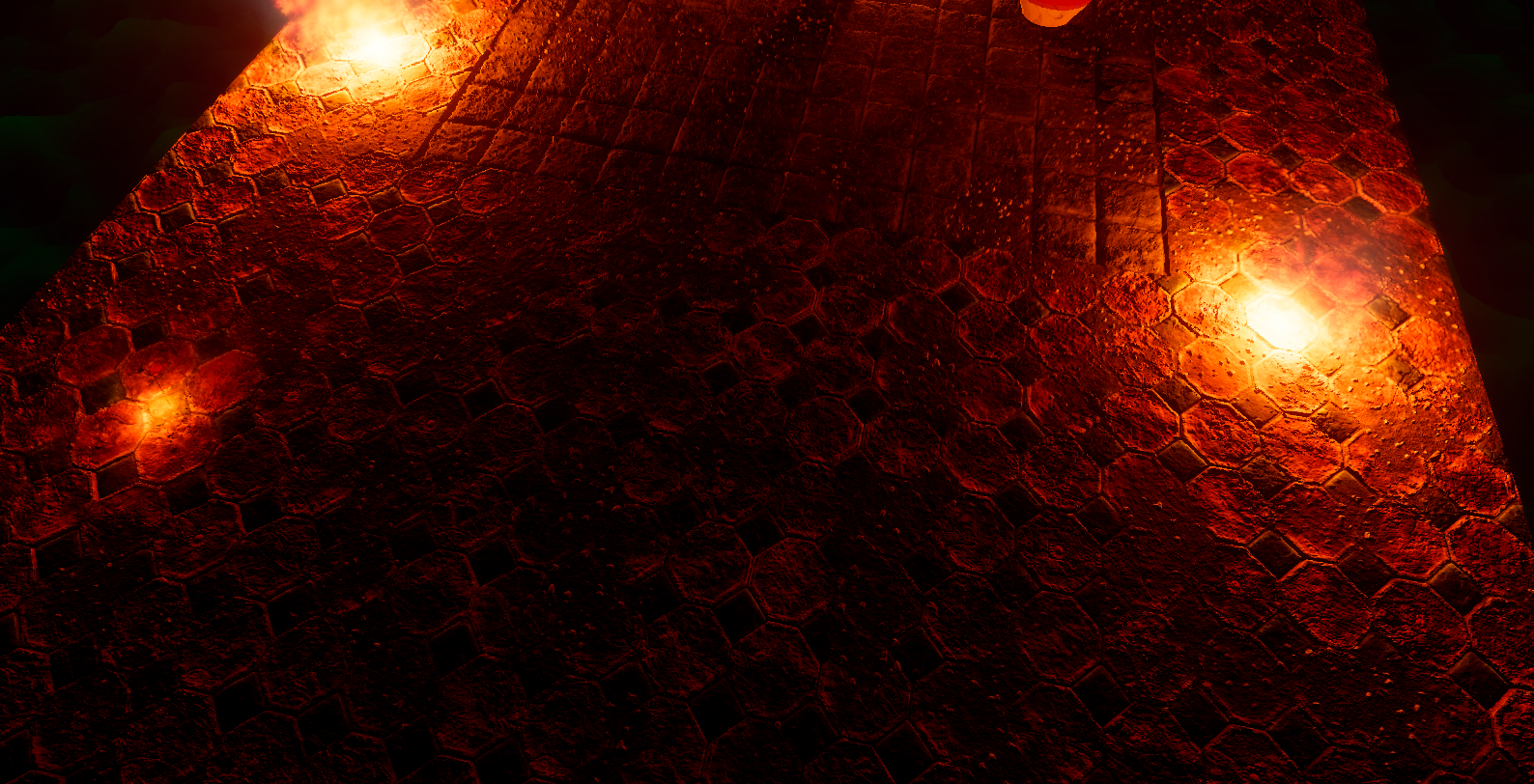
This is the final result adapted cleanly to the High Definition Render Pipeline (HDRP). Despite being a completely flat 2D plane, the Parallax Occlusion and dynamic Multi-Texture Blending produce an incredibly convincing illusion of depth and physical relief.